I was heartened by a comment of one of the anonymous reviewers of the manuscript of my new book, A Theory of Applied Linguistics: Imagining and Disclosing the Meaning of Design (2024; Springer). It reads:
 The strength of this work lies in its … rich and perceptive exemplifications and references spanning over fifty years.

So, we have examples to illustrate the point, and experience that acknowledges history.
Continue reading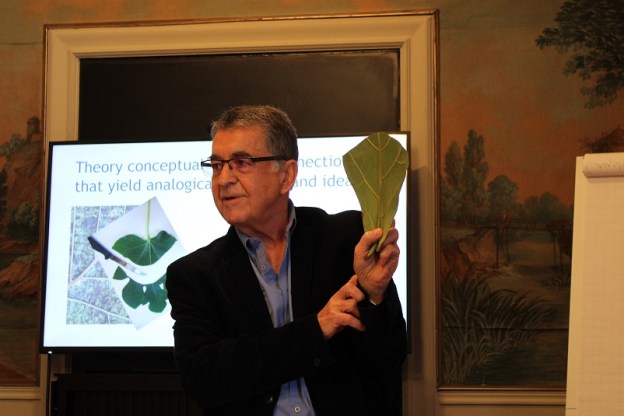

 If you were a scientist working in the 1950’s, you would claim that your work, the theory that you subscribed to, and the results of your academic endeavours were all neutral and objective. In the heydays of modernism, the mere suggestion that there were any external, non-scientific influences on your work would have implied a threat to the integrity of that work.
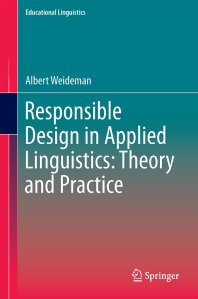 Is a theory of applied linguistics desirable? And if so, is it possible? My new book, Responsible design in applied linguistics: theory and practice (2017; Springer) proceeds from the thesis that applied linguistics needs a theoretical foundation. It is indeed possible to delineate its work (and specifically distinguish it from linguistics). Providing it with a theoretical foundation might additionally yield new insight into the principles that underlie applied linguistic designs. Those designs we encounter as the interventions that we call language courses, language tests and language policies.
  Second, applied linguists are accountable to the public for the designs they produce
 Albert Weideman