 If you were a scientist working in the 1950’s, you would claim that your work, the theory that you subscribed to, and the results of your academic endeavours were all neutral and objective. In the heydays of modernism, the mere suggestion that there were any external, non-scientific influences on your work would have implied a threat to the integrity of that work.
Fast forward 60 years, and you would now find it difficult to acknowledge that your scientific analyses are indeed purely scientific, uninfluenced by any prejudice, and untainted by subjective issues. Continue reading
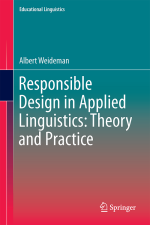 Is a theory of applied linguistics desirable? And if so, is it possible? My new book, Responsible design in applied linguistics: theory and practice (2017; Springer) proceeds from the thesis that applied linguistics needs a theoretical foundation. It is indeed possible to delineate its work (and specifically distinguish it from linguistics). Providing it with a theoretical foundation might additionally yield new insight into the principles that underlie applied linguistic designs. Those designs we encounter as the interventions that we call language courses, language tests and language policies.
  Avasha Rambiritch of the University of Pretoria and I have just written a chapter for a book edited by John Read (Post-admission Language Assessment of University Students, Springer, 2016) that shows how making sufficient information available about the conception, design, development, refinement and eventual administration of a test of language ability — in other words “telling the story of a test” — is the first step towards ensuring accountability for such tests. The test in question, the Test of Academic Literacy for Postgraduate Students (TALPS), is used to determine the academic literacy of prospective postgraduate students. For the full reference, see the
  Albert Weideman